




Refractive Errors & Eye Health
Your eyes play a vital role in how you experience the world, making eye health and clear vision essential at every stage of life.
Refractive errors and eye conditions can affect how well you see, often developing gradually without immediate symptoms. Understanding these conditions allows for early detection, proper management, and long-term protection of your vision.
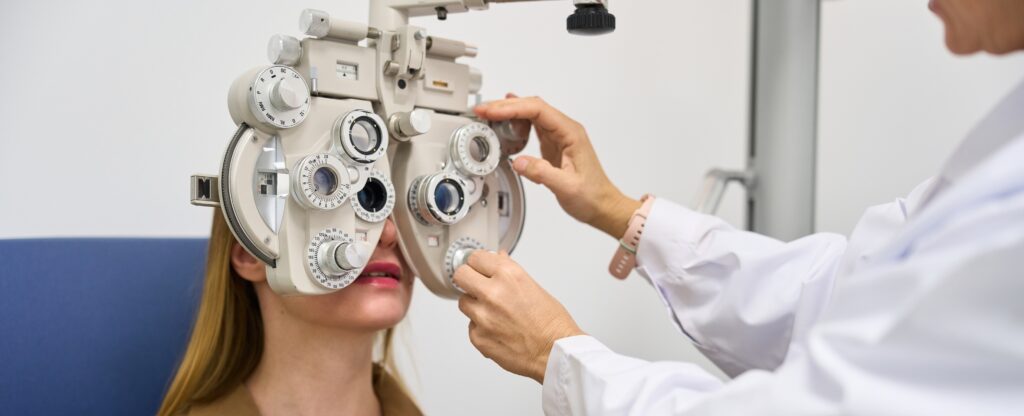
At The Eye Boutique, we focus on comprehensive eye care that not only improves visual clarity but also monitors and protects your overall eye health. Regular eye examinations are key to identifying changes early and ensuring your eyes continue to function at their best. Below, we explore some of the most common refractive errors and eye conditions, helping you better understand how they affect your vision and when to seek professional care.
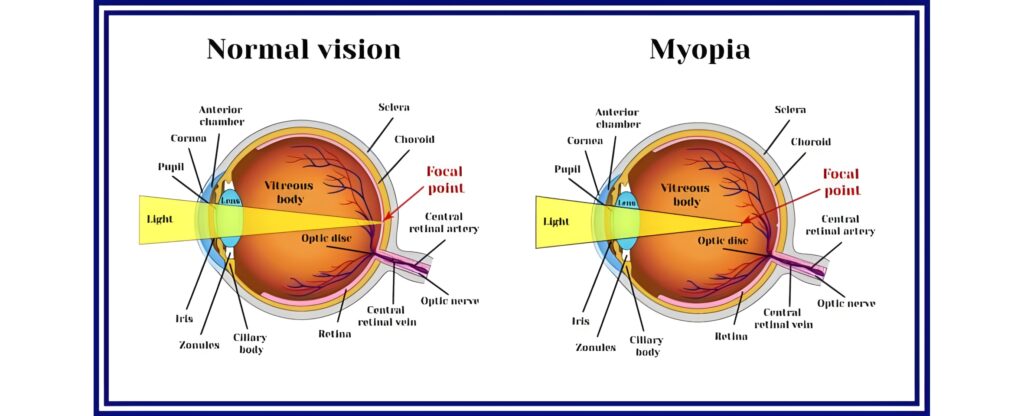
Myopia, commonly known as nearsightedness, is a refractive error where distant objects appear blurry while close objects remain clear. This occurs when light entering the eye is focused in front of the retina instead of directly on it.
Myopia typically develops when the eye is slightly longer than normal or when the cornea is too curved. This affects how light is focused inside the eye. Common contributing factors include:
• Genetics (family history of myopia)
• Increased screen time or near work
• Limited exposure to natural outdoor light
Myopia often develops gradually and may worsen over time. Symptoms may include:
• Blurry vision when looking at distant objects
• Difficulty seeing clearly while driving, especially at night
• Squinting to improve focus
• Eye strain or headaches
Individuals with myopia can usually see objects up close clearly, such as reading or using a phone, but may struggle with distance vision, such as viewing road signs or watching television.
Myopia is commonly corrected with:
• Prescription glasses
• Contact lenses
Regular eye examinations are important to monitor changes in prescription and ensure optimal visual clarity.
If you notice difficulty seeing distant objects clearly or experience frequent eye strain, it is important to schedule an eye examination. Early detection and correction can help maintain clear, comfortable vision.
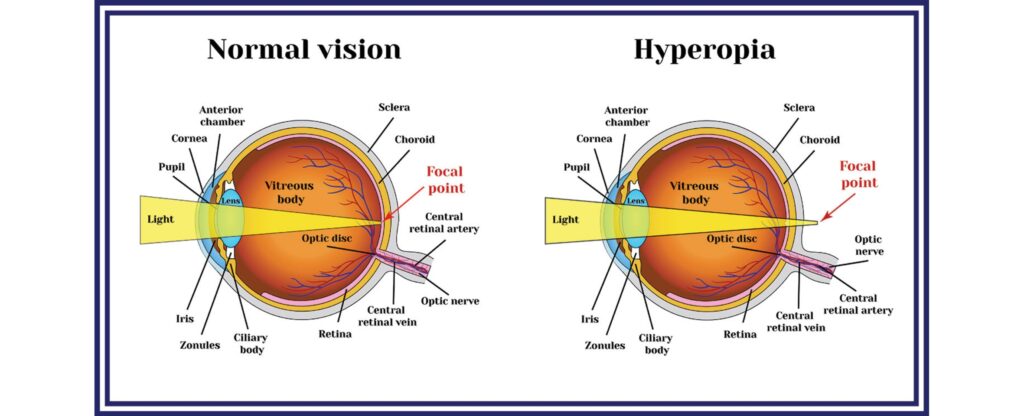
Hyperopia, commonly known as farsightedness, is a refractive error where distant objects are seen more clearly than nearby objects. This occurs when light entering the eye is focused behind the retina instead of directly on it.
Hyperopia typically occurs when the eye is shorter than normal or when the cornea has too little curvature. This affects how light is focused within the eye. Common contributing factors include:
• Natural eye shape (often present from birth)
• Family history of hyperopia
• Age-related changes in vision
Hyperopia can sometimes go unnoticed, especially in younger individuals who can compensate for it. Symptoms may include:
• Blurred vision when reading or focusing on close objects
• Eye strain or discomfort during near tasks
• Headaches after prolonged reading or screen use
• Difficulty maintaining focus at close distances
People with hyperopia may see distant objects clearly, but tasks such as reading, using a phone, or working on a computer can become difficult or uncomfortable over time.
Hyperopia is commonly corrected with:
• Prescription glasses
• Contact lenses
These help refocus light correctly onto the retina, improving clarity and reducing strain.
If you experience difficulty focusing on close objects or frequent eye strain, it is important to schedule an eye examination. Early correction helps improve comfort and prevents unnecessary visual fatigue.
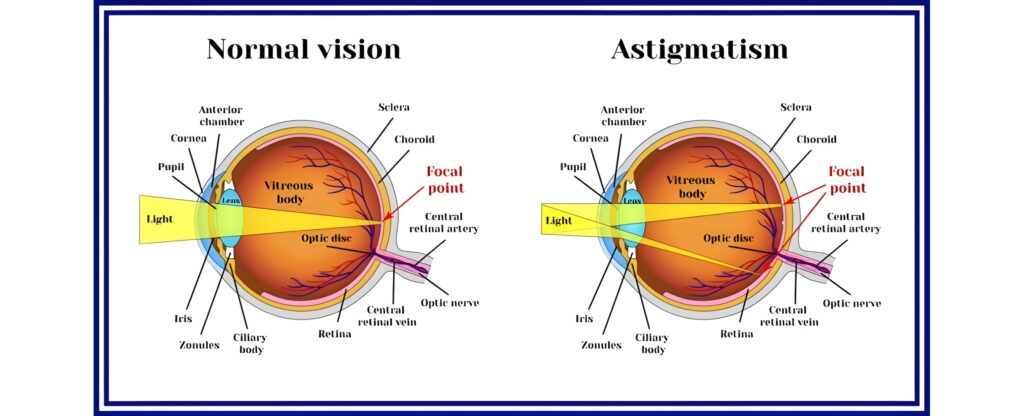
Astigmatism is a common refractive error where vision appears blurred or distorted at all distances. This occurs when the cornea (the front surface of the eye) is irregularly shaped, causing light to focus unevenly on the retina.
Astigmatism is usually present from birth and is caused by an uneven curvature of the cornea or lens. Common factors include:
• Natural shape of the eye
• Genetic predisposition
• Changes in the eye over time
Astigmatism can affect both near and distance vision. Symptoms may include:
• Blurred or distorted vision
• Difficulty seeing clearly at any distance
• Eye strain or discomfort
• Frequent headaches
• Squinting to improve focus
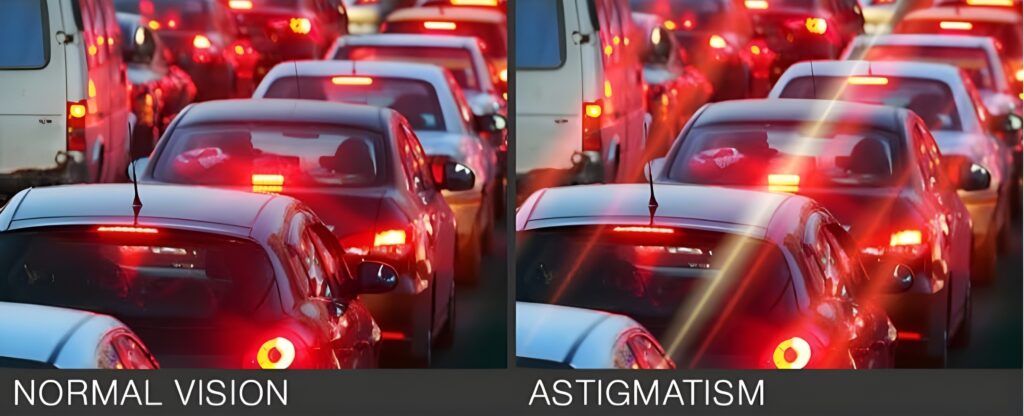
Because light is not focused evenly, objects may appear stretched, shadowed, or unclear. This can make everyday tasks such as reading, driving, or using digital devices more challenging.
Astigmatism is commonly corrected with:
• Prescription glasses
• Contact lenses (including specialised toric lenses)
These help refocus light evenly onto the retina, improving clarity.
If you experience blurred or distorted vision, or frequent eye strain, it is important to have your eyes examined. Early correction helps improve visual clarity and overall comfort.
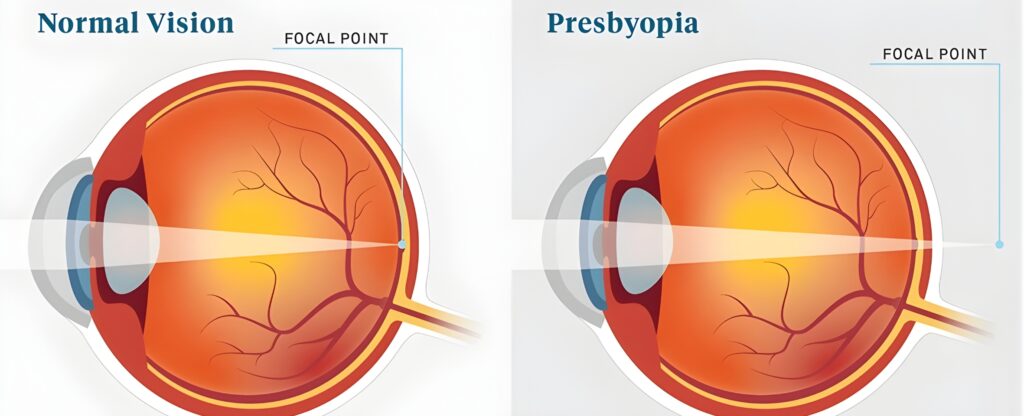
Presbyopia is a natural, age-related condition that affects the eye’s ability to focus on close objects. It typically becomes noticeable from around the age of 40 and gradually progresses over time. This occurs as the eye’s lens loses flexibility, making it more difficult to adjust focus for near tasks.
Presbyopia is part of the normal ageing process. Over time, the lens inside the eye becomes less flexible, reducing its ability to change shape and focus on nearby objects.
It is not caused by lifestyle or environmental factors, but rather natural changes within the eye.
Presbyopia develops gradually and may include:
• Difficulty reading small print
• Holding reading material further away
• Eye strain during near tasks
• Headaches after prolonged reading or screen use
• Reduced clarity in low lighting
Individuals with presbyopia often notice that near tasks, such as reading or using a phone, become more challenging, while distance vision may remain unchanged.
Presbyopia can be managed with:
• Reading glasses
• Multifocal or progressive lenses
• Contact lenses designed for near and distance vision
These options help restore clear and comfortable vision for everyday activities.
If you are experiencing difficulty focusing on close objects or increased eye strain, it is recommended to schedule an eye examination. Early management helps improve comfort and maintain visual clarity.
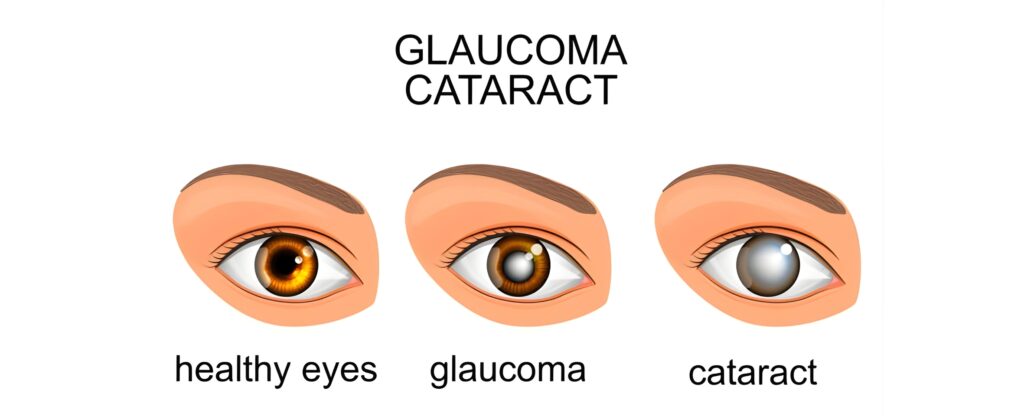
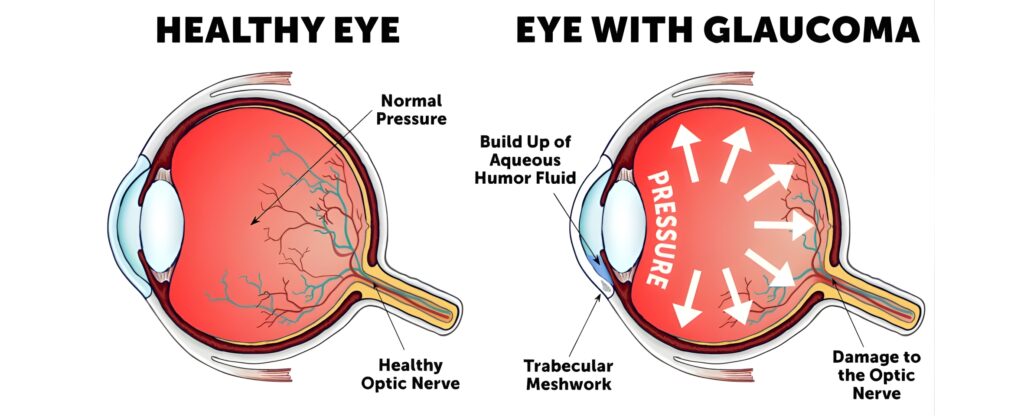
Glaucoma is a group of eye conditions that damage the optic nerve, which is essential for vision. This damage is often linked to increased pressure within the eye, although it can occur even with normal pressure levels. If left untreated, glaucoma can lead to gradual and permanent vision loss.
Glaucoma is commonly associated with a build-up of pressure inside the eye due to improper drainage of fluid. Risk factors may include:
• Increased intraocular pressure
• Family history of glaucoma
• Age (more common over 40)
• Certain medical conditions such as diabetes
• Long-term use of corticosteroid medication
Glaucoma often develops slowly and may not present noticeable symptoms in its early stages. As the condition progresses, symptoms may include:
• Gradual loss of peripheral (side) vision
• Tunnel vision in advanced stages
• Blurred vision
• Eye discomfort or pressure
Because early stages are often symptomless, regular eye examinations are essential.
Glaucoma typically affects peripheral vision first, meaning you may not notice changes until significant damage has occurred. Over time, central vision can also be affected if left untreated.
While glaucoma cannot be reversed, early detection allows it to be effectively managed. Treatment options may include:
• Prescription eye drops to reduce eye pressure
• Ongoing monitoring of eye health
• Referral for specialist care where necessary
Regular eye examinations are the most effective way to detect glaucoma early. If you have a family history or are at higher risk, routine check-ups are especially important.
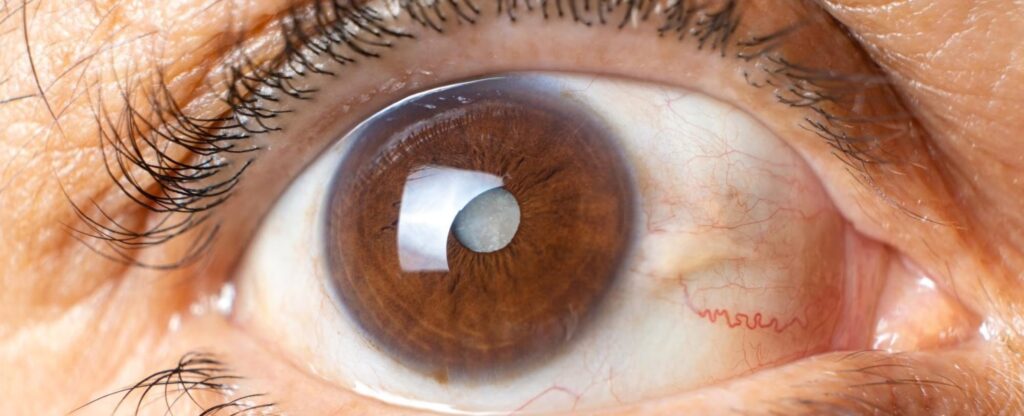
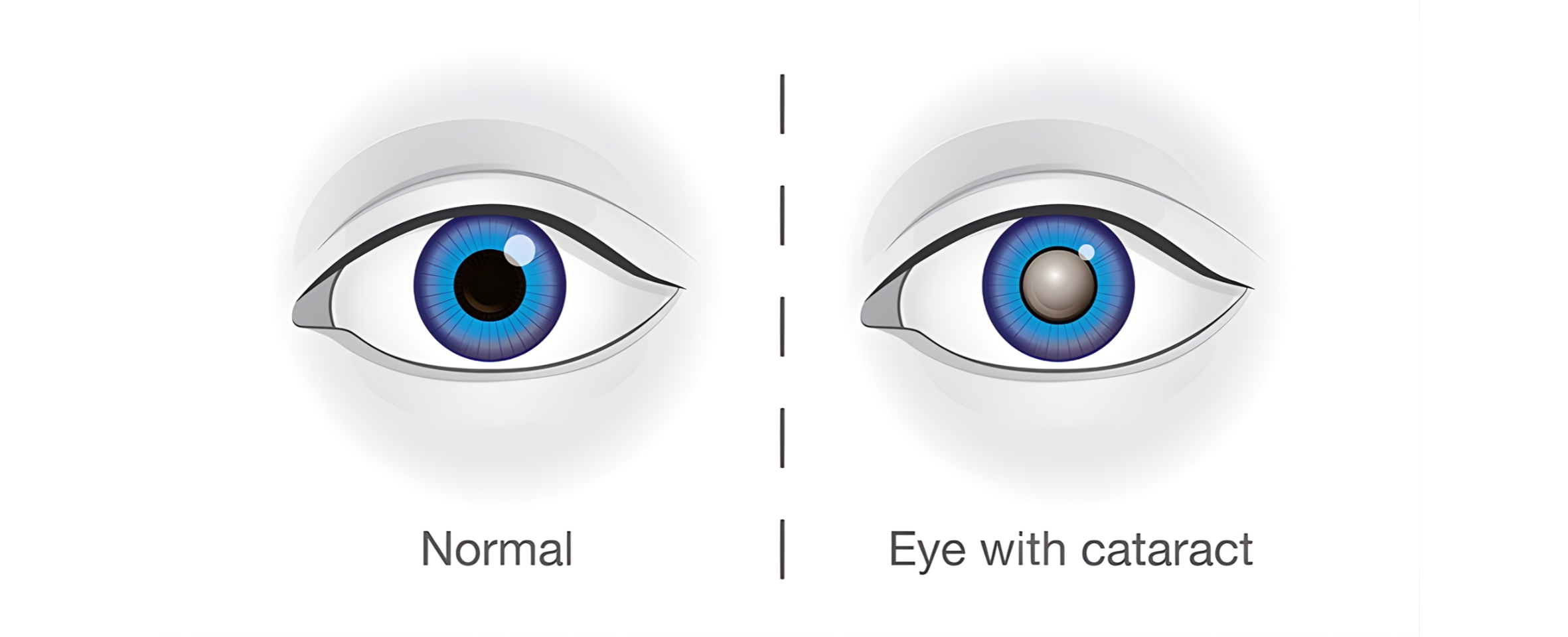
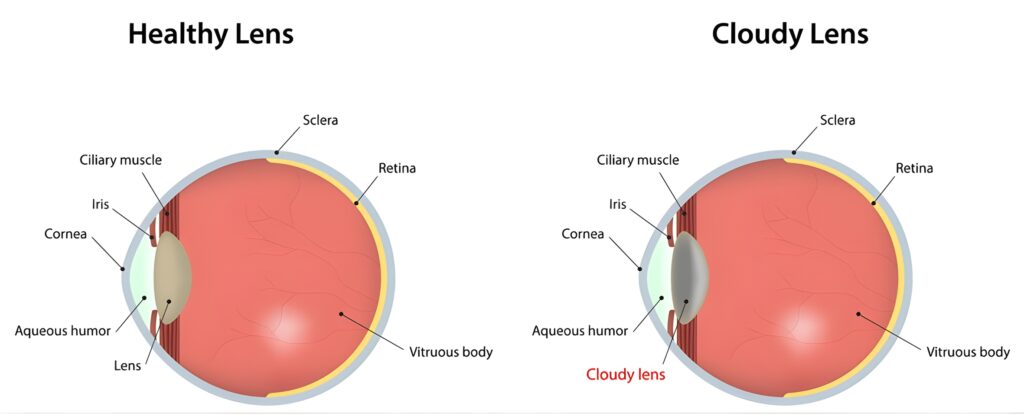
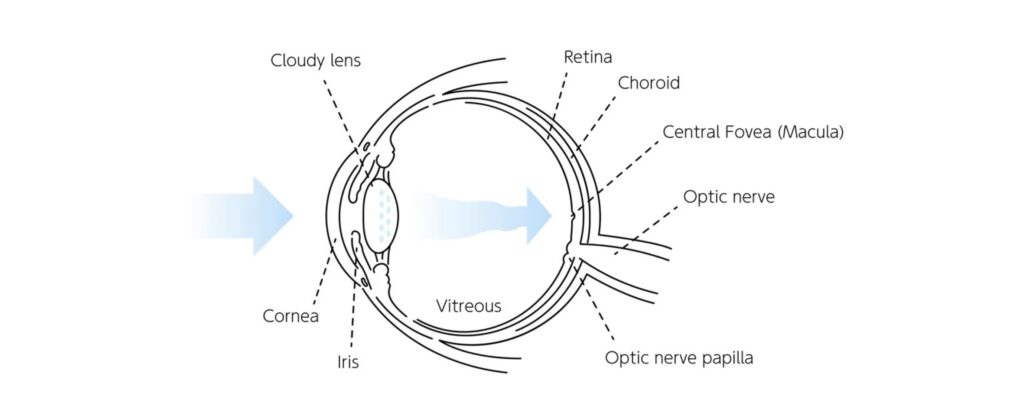
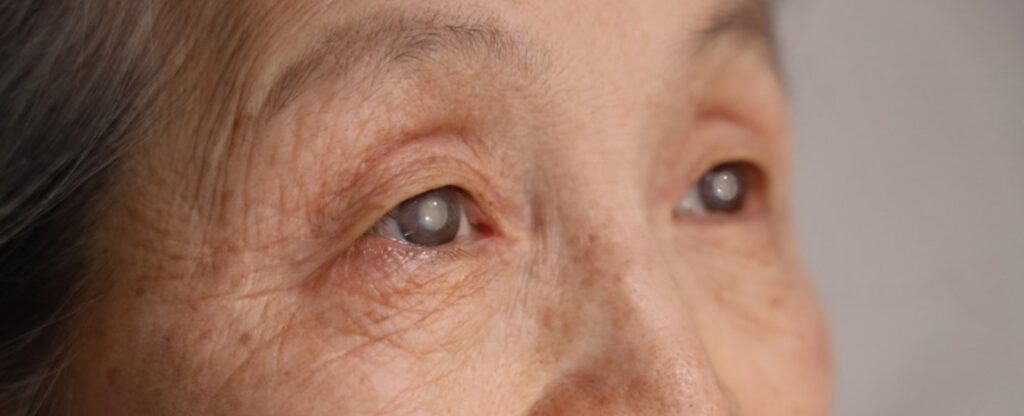
Cataracts occur when the natural lens of the eye becomes cloudy, leading to blurred or dim vision. The lens, which is normally clear, helps focus light onto the retina. When it becomes clouded, vision gradually becomes less sharp. Cataracts usually develop slowly and are most commonly associated with ageing.
Cataracts are primarily caused by natural changes in the lens over time, where proteins begin to break down and form cloudy areas. Other contributing factors may include:
• Ageing
• Prolonged exposure to UV light
• Diabetes and certain medical conditions
• Smoking
• Previous eye injury or surgery
Cataracts develop gradually and may include:
• Blurry or cloudy vision
• Increased sensitivity to light and glare
• Difficulty seeing at night
• Faded or dull colours
• Frequent changes in prescription
As cataracts progress, vision may become increasingly unclear and less responsive to glasses or contact lenses. Everyday tasks such as reading, driving, or recognising faces may become more difficult.
In the early stages, vision may be improved with updated prescriptions or improved lighting.
As cataracts progress, treatment involves a surgical procedure where the cloudy lens is replaced with a clear artificial lens. Cataract surgery is a common and highly effective procedure.
If you notice gradual changes in your vision, increased glare, or difficulty with daily tasks, it is important to schedule an eye examination. Early detection helps monitor progression and determine the right time for treatment.
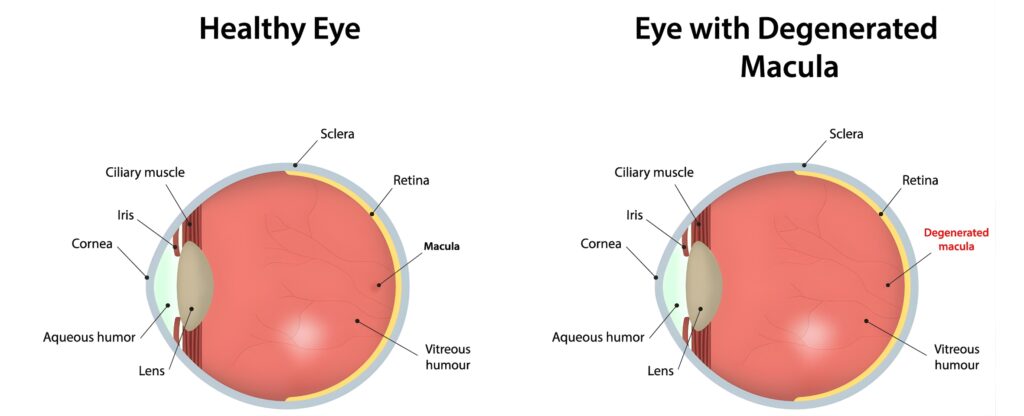
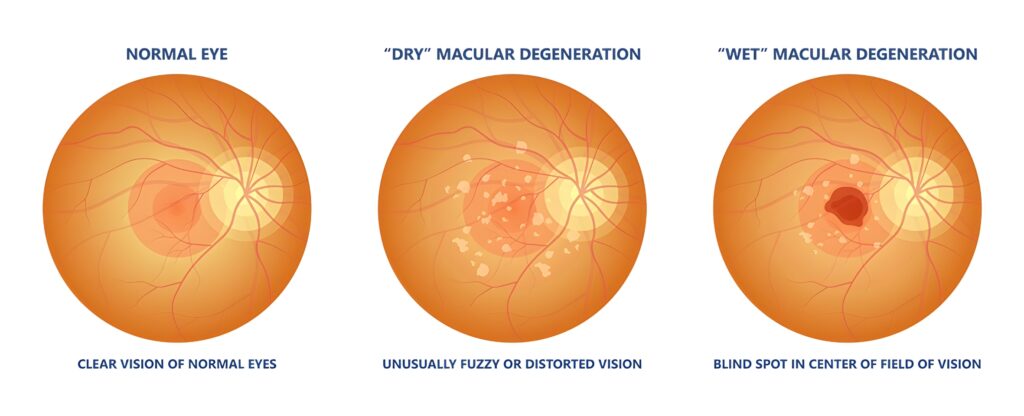
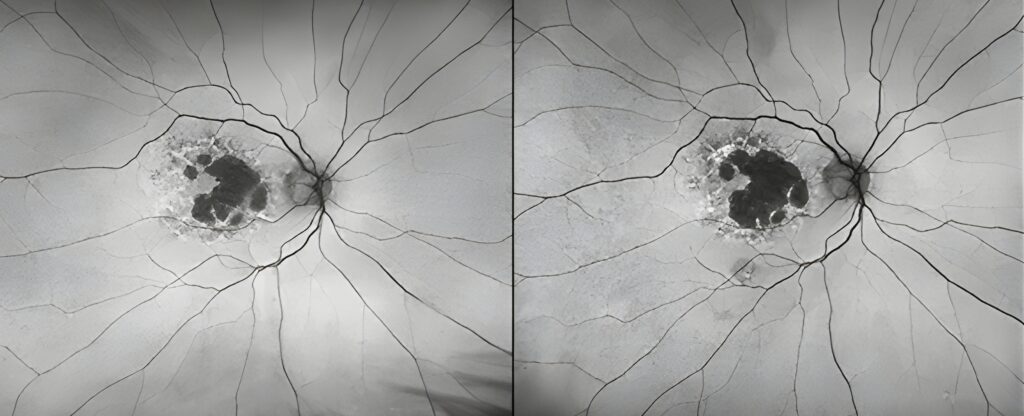
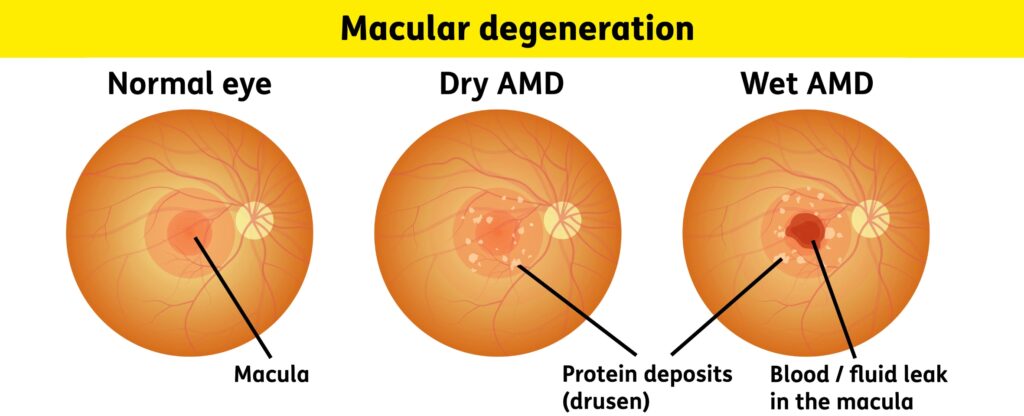
Macular Degeneration is an eye condition that affects the macula, the central part of the retina responsible for sharp, detailed vision. It primarily impacts central vision, making tasks such as reading, recognising faces, and driving more difficult, while peripheral (side) vision often remains unaffected.
Macular Degeneration is most commonly age-related and typically occurs in individuals over the age of 50. Risk factors may include:
• Ageing
• Family history
• Smoking
• Poor diet and lifestyle factors
• Prolonged exposure to UV light
The condition develops gradually and may include:
• Blurred or distorted central vision
• Difficulty reading or recognising faces
• Dark or empty spots in the centre of vision
• Straight lines appearing wavy
Macular Degeneration affects the ability to see fine detail clearly. While side vision is usually maintained, central vision becomes increasingly impaired, affecting everyday tasks.
While there is no cure for Macular Degeneration, early detection can help slow progression and manage symptoms. Management may include:
• Regular monitoring of eye health
• Lifestyle and dietary adjustments
• Use of visual aids where necessary
• Referral for specialist care if required
If you notice changes in your central vision, distortion, or difficulty with detailed tasks, it is important to have your eyes examined. Regular eye examinations are essential for early detection and ongoing monitoring.
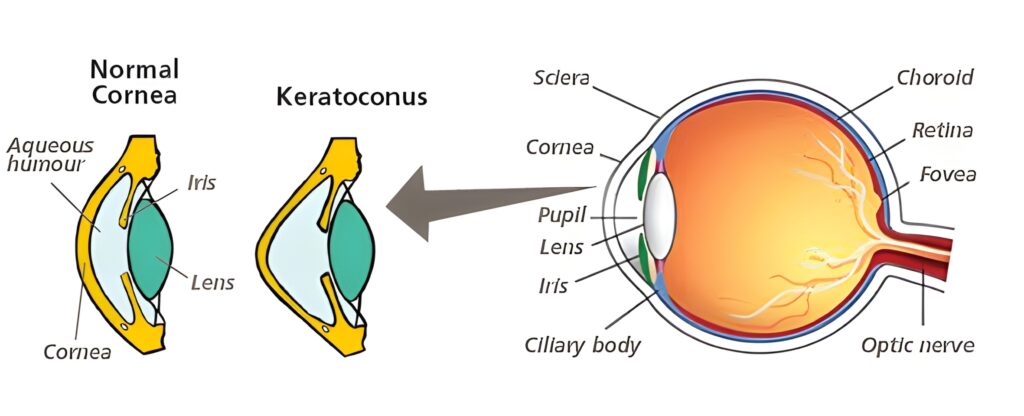
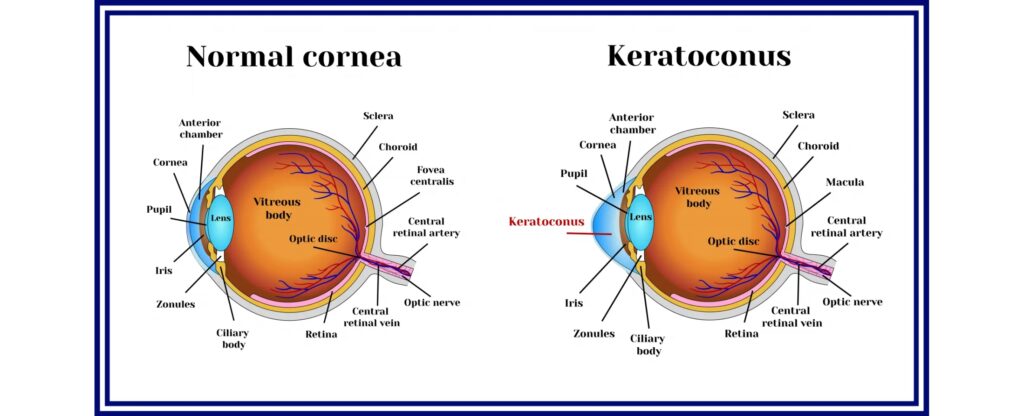
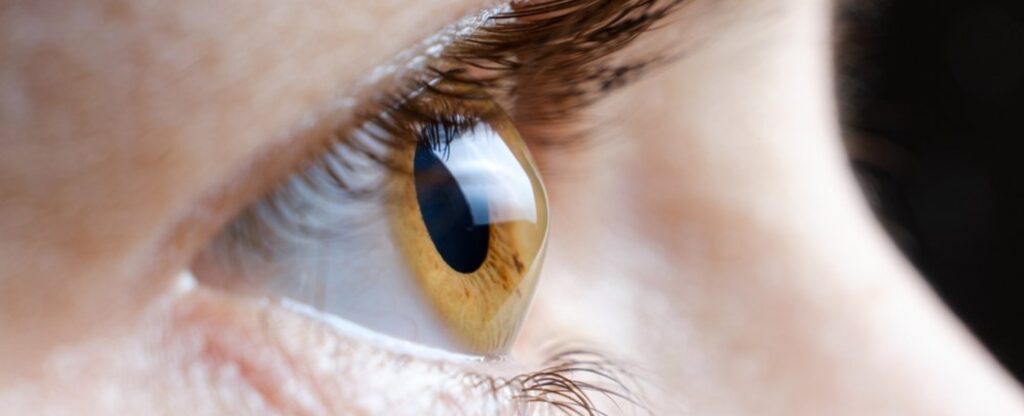
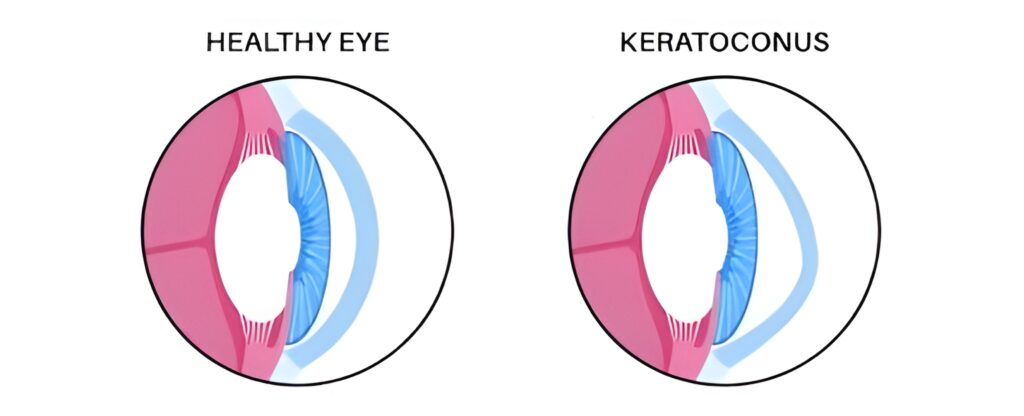
Keratoconus is a condition where the cornea (the clear front surface of the eye) becomes progressively thinner and begins to bulge into a cone-like shape. This irregular shape affects how light enters the eye, leading to distorted and blurred vision.
The exact cause of keratoconus is not fully understood, but it is believed to be linked to a combination of genetic and environmental factors. Possible contributing factors include:
• Family history of keratoconus
• Frequent eye rubbing
• Certain underlying eye conditions
• Weakening of corneal structure over time
Keratoconus often develops gradually and may include:
• Blurred or distorted vision
• Increased sensitivity to light
• Difficulty seeing clearly at night
• Frequent changes in prescription
• Ghosting or double vision
As the cornea changes shape, vision becomes increasingly irregular and may not be fully corrected with standard glasses. This can make everyday activities such as reading, driving, or using screens more challenging.
Management depends on the severity of the condition and may include:
• Specialised contact lenses for improved vision
• Regular monitoring of corneal changes
• Referral for advanced treatment where necessary
Early detection is key to slowing progression and maintaining vision.
If you notice ongoing changes in your vision or frequent prescription updates, it is important to schedule an eye examination. Early diagnosis allows for better management and improved visual outcomes.
Elevating eye care through clinical precision and curated designer eyewear.
Where refined service meets modern optical excellence.
📍 Durban North
📞 031 023 0940
✉ info@theeyeboutique.co.za
© 2026 The Eye Boutique. All Rights Reserved.
WhatsApp us